Sleep & Bedding Guide
How Wool Comforters Manage Warmth and Moisture
A comforter should feel inviting, not like a nightly negotiation with the thermostat. Wool is valued for its ability to insulate while taking up and releasing moisture, but the experience depends on more than the fiber alone. Fill weight, room temperature, bedding layers and personal preference all shape whether a wool comforter feels just right.
Published October 27, 2026
Some bedding makes its case with a cloudlike first impression. Wool tends to offer a quieter kind of appeal: a steady, substantial layer that can feel cozy without necessarily being heavy or stuffy. Its appeal comes from the way its fibers interact with both warmth and moisture, two factors that can make a bed feel comfortable—or less so—over the course of a night.
That reputation is not a promise that every sleeper will feel cool in summer and warm in winter. No comforter can override a very warm room, personal sensitivity to heat or a stack of thick blankets. Instead, wool offers particular material qualities that may suit people looking for a layer with insulating ability and moisture-handling characteristics.
Sleep and Beyond’s wool comforter range includes a standard myComforter and a lighter-weight myComforter Light. Their different fill amounts make them useful examples of an important point: choosing a comforter is not just choosing a material. It is also choosing how much insulation you want between you and the room.
Why wool is associated with temperature regulation
Wool fibers have a naturally complex structure, and that structure helps explain why wool bedding is often described as insulating and breathable. A layer of wool can hold still air within its fill, slowing the movement of heat. At the same time, wool can absorb moisture vapor and release it into the surrounding air. Those properties may help a bed feel more even for some people, particularly when their comfort changes as the night progresses.
It is useful to think of temperature regulation as a balance rather than a cooling effect. Wool does not actively lower the temperature of a sleeper or the bedroom. Its contribution is more passive: it provides insulation, while its moisture behavior may help limit the clammy feeling that can accompany damp bedding. How much that matters depends on the person, the room and the rest of the bed.
Wool’s ability to take up moisture is also different from a promise that the comforter will feel dry under every condition. If someone is sweating heavily, if the room is humid, or if the bedding is layered too warmly, a comforter can still feel uncomfortable. Ventilation, pajamas, sheets, mattress characteristics and room conditions remain part of the picture.
For a practical comparison, imagine a bedroom that feels cool at bedtime but warms up later. A lofty, heavy layer may be too much for one sleeper, while a thinner comforter may feel insufficient to another. Wool’s material qualities can help make the bed feel comfortable across ordinary fluctuations, but choosing the appropriate fill weight is still essential.
Moisture management: what it means in everyday use
Moisture management is a textile term that can sound more technical than the experience itself. In bed, it often means how fabric and fill interact with moisture vapor produced by the body. Wool can absorb some moisture into its fibers and later release it, rather than leaving all of it immediately against the skin. That may help some sleepers experience a less clammy feel, though results vary.
It does not mean wool is waterproof, nor does it mean a wool comforter should be exposed to spills or soaked. Moisture vapor and liquid water are different challenges. A drink spill, a leak or other substantial wetting calls for prompt care according to the item’s instructions. Wool fill also benefits from being kept clean and protected, rather than repeatedly washed without need.
Because moisture behavior is only one part of comfort, it helps to notice what is actually bothering you at night. Do you wake feeling overheated? Is the discomfort tied to a warm room, heavy pajamas or several layers? Does the bed feel damp, or simply too insulated? Identifying the pattern gives you a better starting point than assuming a new comforter will solve every source of nighttime discomfort.
- Warmth: Consider how cold your bedroom gets and whether you typically sleep warm or cool.
- Moisture: Think about whether your concern is a clammy feeling, perspiration or simply feeling too bundled.
- Layers: Count the comforter, blanket, duvet cover and sleepwear together; each contributes to the overall feel.
- Routine: Airing and protecting bedding can help keep it fresher between appropriate cleanings.
This kind of small investigation can also help you decide whether to adjust the whole bed before replacing anything. A breathable sheet, lighter sleepwear or fewer layers may make a meaningful difference. The right comforter is important, but it is one part of a sleep environment rather than a standalone climate-control system.
Fill weight: the detail that changes the feel
When comparing wool comforters, fill weight is one of the clearest specifications to examine. A higher fill amount generally means more material in the comforter and may correspond to a warmer or more substantial feel. But fill weight should not be treated as a universal warmth rating. Comforter size, construction, cover fabric, room conditions and individual perception all influence the result.
The Sleep and Beyond myComforter is described as containing 13 ounces of wool fill per square yard. The company presents it as a year-round option and describes wool as helping regulate temperature and wick moisture. Those descriptions communicate the intended use, but personal experience can differ. Someone in a cool room may welcome the coverage, while a hot sleeper in a warm climate may prefer a lighter option.
The myComforter Light is specified at 5 ounces of wool fill per square yard and is presented for warmer seasons or climates, or for sleepers who keep a cool room but want a touch of warmth. This lighter fill is a useful comparison point for anyone who likes wool’s material qualities but does not want as substantial a layer.
Rather than thinking of one as universally better, compare the two in relation to your usual sleep conditions. Do you leave the window open in winter? Keep the heating on overnight? Share a bed with someone whose temperature preferences differ from yours? A lighter comforter can be easier to adapt with an additional blanket, while a heavier one may provide the coverage you want without requiring extra layers.
When product information uses terms such as “light,” “medium” or “all-season,” check the actual fill specification and dimensions where available. Labels can vary between makers, so comparing the stated construction is often more helpful than relying on a season name alone. If you are between options, consider which discomfort you would rather avoid: feeling under-covered on a cold night or having too much insulation on a mild one.
Cover fabric and the layers around the comforter
The fill may be the headline, but the shell—the fabric enclosing the fill—also contributes to how a comforter feels. Sleep and Beyond describes the myComforter as encased in natural cotton sateen, while the Light version is described with a cotton sateen cover as well. Cotton can provide a familiar textile surface, and the weave and finish affect its hand and drape.
A duvet cover adds another layer between the comforter and the sleeper. It can protect the comforter from everyday soil and make routine laundering easier, but it also changes the overall hand and may influence how warm the complete bed feels. A heavier or less breathable cover can make a light comforter feel more substantial; a lighter cover may preserve a more relaxed drape.
Sleep and Beyond recommends using a removable duvet cover for its wool comforters. The myComforter product information also notes that regular airing and sunning can refresh the bedding, and advises against frequent washing because the batting can separate inside the quilted pockets. The Light comforter has similar care guidance. Always check the specific label and manufacturer instructions before washing or drying, since care recommendations may vary by item.
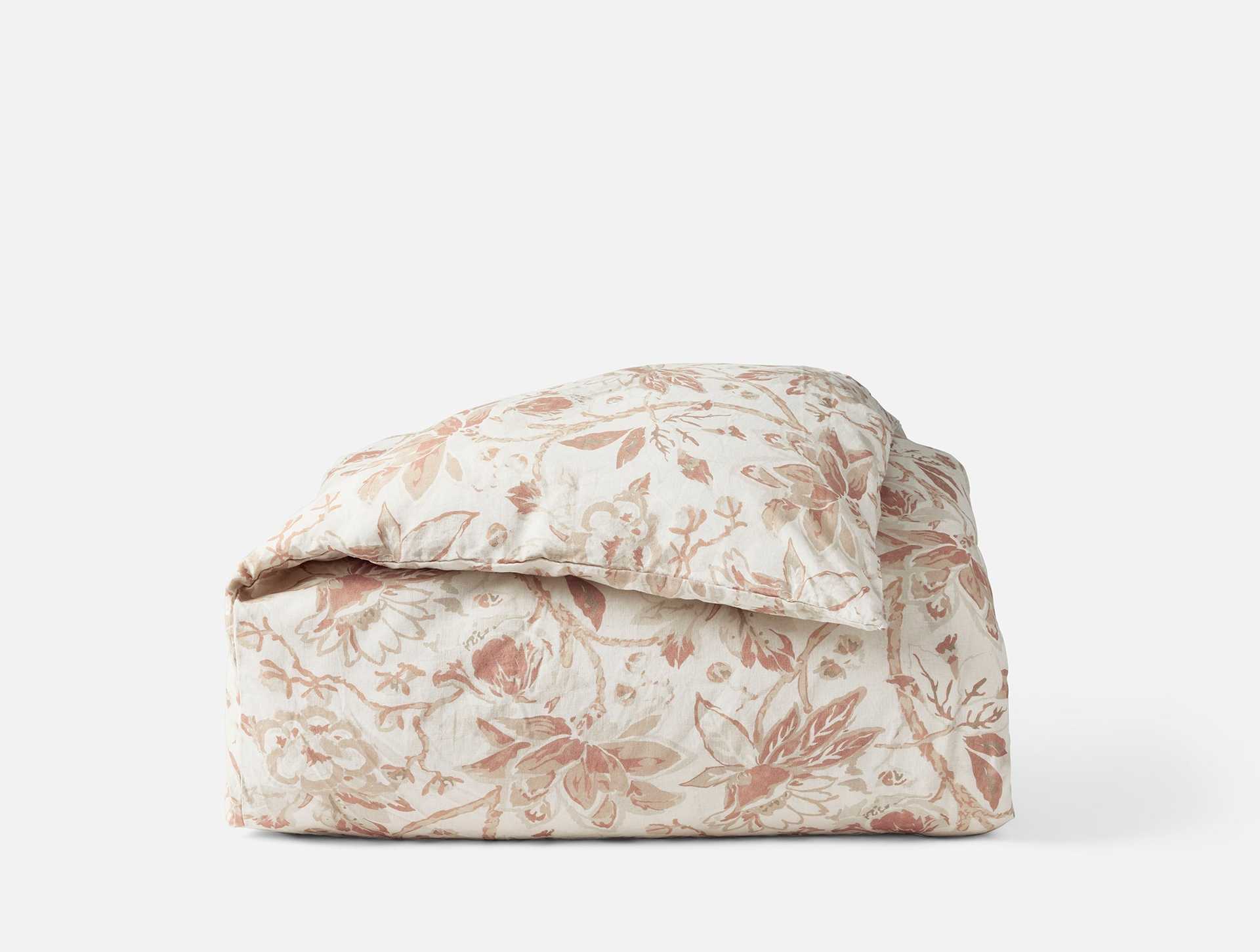
For a duvet cover, check how it closes and whether it has internal ties. Ties can help keep an insert in place, reducing the need to rearrange the comforter during the night. The Sea Bloom Print Duvet Cover, for example, is described as having internal ties and coconut shell button closures. Its linen-and-organic-cotton blend is a different textile choice from a cotton sateen shell, and its care instructions should be followed separately from those for a wool insert.
A closer look at Sleep and Beyond wool comforters
Product details can help narrow a choice without making the decision for you. Here is a straightforward comparison based on the available descriptions:
| Detail | myComforter | myComforter Light |
|---|---|---|
| Fill | 100% washable wool | 100% washable wool |
| Stated fill amount | 13 oz per square yard | 5 oz per square yard |
| Cover | Natural cotton sateen | Natural cotton sateen |
| Intended use described | A warmer, more substantial all-around layer | Warmer seasons, warm climates or lighter coverage |
These distinctions are useful, but they should not be read as a guarantee of how either comforter will perform in every bedroom. The room’s temperature, humidity, mattress and sheet materials, sleepwear, personal heat sensitivity and whether the bed is shared all matter. The best choice is the one that fits your usual conditions and can be cared for in a way that suits your routine.
If a product is described as washable, read the full care instructions rather than assuming frequent machine washing is appropriate. For the myComforter, the supplied guidance recommends washing only when needed, using a wool or delicate cycle without agitation, and following the instructions for detergent and drying. It also suggests airing the comforter regularly and using a duvet cover to reduce the need for cleaning. The Light comforter’s directions similarly emphasize gentle care.
How to choose the right comforter for your room
A quick assessment of your bedroom and sleep habits can make the comparison less abstract. Start with the room, not the marketing language. If the temperature stays fairly cool overnight, a more substantial fill may be appealing. If you tend to sleep hot or live in a warm climate, the Light option may be a more comfortable starting point. If the temperature swings from season to season, consider whether you prefer one adaptable layer or a set of lighter layers you can add and remove.
Then account for your own patterns. Someone who sleeps alone can choose around their personal comfort; a couple may need to negotiate different preferences. Two separate blankets can sometimes be a practical way to accommodate different warmth needs, even when the bed itself is shared. If you are prone to waking too warm, begin by simplifying the surrounding layers before assuming that more insulation is the answer.
- Check your room overnight: Note the temperature at bedtime and near morning for several nights.
- Consider your usual layers: Include pajamas, sheets, duvet cover, blankets and any mattress pad.
- Match the fill to your preference: Compare the stated fill weight, not only the seasonal description.
- Plan for care: Decide whether you can protect, air and clean the comforter according to its instructions.
- Allow for adjustment: A lighter layer can be paired with a blanket when needed; a heavier layer may be less flexible in warm weather.
If possible, review return and trial terms before purchasing, especially if you are uncertain about fill weight. Bedding is personal: the same comforter can feel airy to one person and too warm to another. Reading specifications carefully and understanding the retailer’s policies can reduce guesswork.
Care habits that help a wool comforter last
Good care does not have to be complicated, but it does need to follow the maker’s directions. A duvet cover helps shield the comforter from everyday contact, and routine airing can help it feel refreshed. Fluffing or gently redistributing the bedding can also restore an even appearance after use. These simple habits may reduce the need for frequent washing.
When cleaning is necessary, avoid improvising. Wool can respond poorly to rough handling, high heat or unsuitable detergents. The Sleep and Beyond care information for its myComforter advises cool or warm water on a wool or delicate cycle without agitation, use of an approved wool detergent, and no spinning. It notes air drying or low-heat tumble drying, while also advising against bleach and ironing. The Light model has comparable guidance. Confirm the current product label before acting, since instructions on the item should take precedence.
Make sure a comforter is thoroughly dry before putting it back into a duvet cover or storing it. If care at home feels uncertain, consult the manufacturer or a qualified cleaner familiar with wool bedding. Never assume that a comforter can be treated like ordinary sheets; the fill and quilted construction require more considered handling.
What wool comforters can—and cannot—promise
Wool has qualities that explain its lasting presence in bedding: it insulates, can absorb and release moisture vapor, and is available in lighter and heavier fill constructions. For some sleepers, those properties combine into a comfortable, balanced feel. For others, the decisive factor may be the room, the comforter’s weight or a preference for another material altogether.
It is best to approach claims about sleep comfort with realistic expectations. A wool comforter is not a treatment for insomnia, night sweats or other health concerns, and it cannot guarantee uninterrupted sleep. If persistent sweating, severe discomfort or sleep disruption is affecting daily life, consider speaking with a qualified healthcare professional. Bedding adjustments may improve comfort, but they are not a substitute for medical advice.
The practical takeaway is simple: use the fiber’s characteristics as a guide, then match the fill weight and care routine to your real bedroom. Sleep and Beyond’s 13-ounce-per-square-yard myComforter and 5-ounce-per-square-yard myComforter Light offer two distinct starting points. Pair either with a suitable cover, keep the rest of the bed in mind, and pay attention to how you feel over several nights.
The bottom line
Wool comforters manage warmth and moisture through the natural behavior of the fiber, but the comfort you experience is shaped by the whole sleep setup. A greater fill amount may feel more substantial; a lighter one may suit warm rooms or sleepers who prefer less coverage. Cover fabric, sheet choice, humidity, sleepwear and personal preference all influence the final result.
For a considered comparison, look beyond labels: check fill weight, shell material, dimensions, intended use and care instructions. The goal is not to find a comforter that promises the perfect night for everyone. It is to find a layer that makes sense for your room, your routine and the kind of warmth you actually enjoy.